What is Domain Flipping? A Beginner’s Guide to Making Money with Domain Names (2026)


When I first got into the world of domain investing, I was fascinated by the idea of buying and selling digital real estate.
I’d read stories about people making a huge profit from expired domains, but I was also terrified of making a costly mistake.
If you’re asking yourself, “how to make money with domain names,” you’re in the right place.
This isn’t a get-rich-quick guide. This is a realistic, no-nonsense introduction to the business of domain flipping, based on my own first-hand experience.
We’ll cover the core domain investment strategies, the potential for profit, and the critical skills you need to learn. For a detailed breakdown of the 5 most popular monetization methods, see my complete guide here.
What Exactly is Domain Investing (or “Domain Flipping”)?
At its core, domain investing is the practice of finding promising expired domains, acquiring them (which involves specific post-auction steps), and selling them for a profit. It operates on the same principle as real estate: buying an undervalued asset, sometimes improving it, and then selling it for its higher market value.
A “domain flip” is simply the act of buying a domain with the primary intention of reselling it relatively quickly.
While some investors focus on brandable, dictionary-word domains, the strategy we’ll focus on is acquiring aged or expired domains that already have an SEO footprint (like backlinks and history), which makes them potentially valuable assets.
Before you can spot an undervalued asset, however, you need to speak the language. The world of domain investing is filled with technical jargon, and understanding the core SEO terminology—from authority metrics to backlink types—is a non-negotiable first step.”
How to Make Money with Domain Names: The Core Strategies
There are three primary domain monetization options for an investor.
1. Direct Flipping (The Quick Flip)
This is the most straightforward model. You find and buy an undervalued domain at auction—a process that requires its own set of effective bidding tactics—and then immediately list it for sale on domain marketplace platforms like Sedo or Afternic.
The profit comes from your ability to spot a gem that others have missed. This requires sharp analytical skills and a deep understanding of what makes a domain valuable.
Many beginners get tricked by inaccurate GoDaddy appraisals, which is why a manual audit is so important.
2. Parking and Selling (The Passive Play)
If you acquire a domain that still gets some “type-in” or direct traffic, you can “park” it. Domain name parking revenue comes from placing simple ads on a landing page.
While the domain earns a small amount of passive income, you wait for an end-user to approach you to buy it. This is a longer-term strategy.
3. Develop and Sell (The “Value-Add” Strategy)
This is the most advanced strategy and often the most profitable. You acquire a promising aged domain and build a small ‘mini-site’ on it with high-quality content.
This process of developing the site proves its ranking potential and dramatically increases its resale value. While flipping raw domains is common, the highest ROI comes from developing the site first. If you have a site with traffic and revenue, check out my advanced guide on how to price and sell your mini-site for maximum profit.
I’ve created a complete step-by-step guide on how to build your first mini-site for this exact purpose. This is a core part of building a domain portfolio.
A Beginner’s Action Plan to Get Started
Feeling ready to start? Here are the first few steps every new investor should take.
Step 1: Find Where to Buy Domain Names
Your journey will begin at domain auction marketplaces. The biggest and most beginner-friendly platform is GoDaddy Auctions.
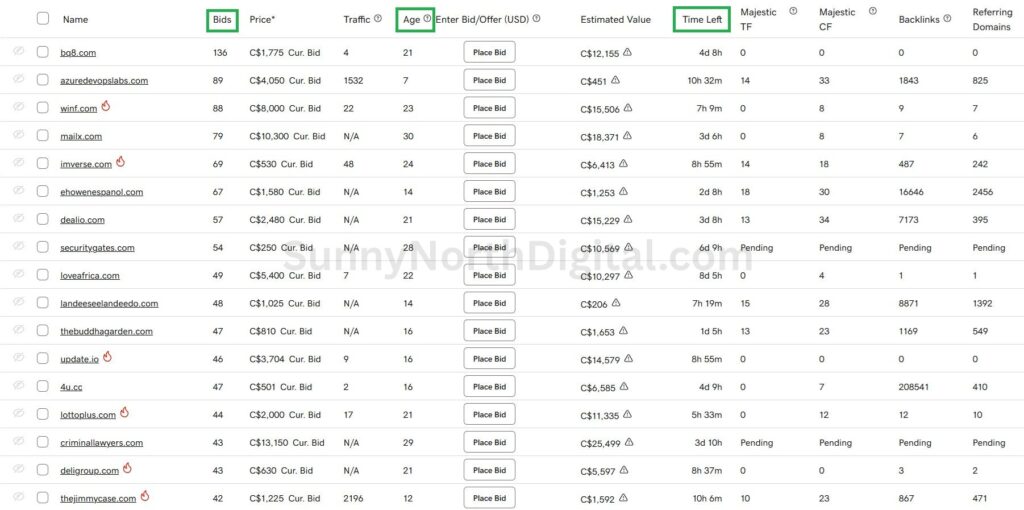
Other platforms like Sedo, Namecheap Auctions, and DropCatch are also popular. Spend your first week just watching auctions and getting a feel for the market.
Step 2: Learn How to Evaluate a Domain’s Potential
This is the most critical skill. You cannot succeed without it. The value of an aged domain is almost entirely based on its SEO profile. You must learn the basics of how to evaluate a domain’s potential by analyzing its backlink history for quality and red flags.
The impact of SEO on domain investment cannot be overstated. A domain with powerful, relevant backlinks can be a goldmine. A domain with a spammy history is worthless. The only way to tell the difference is with a professional audit.
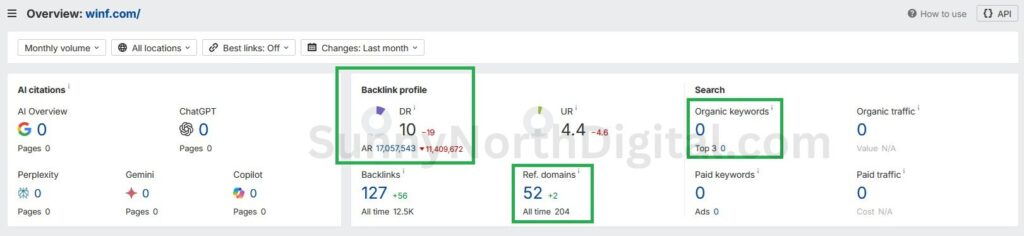
The most critical skill in domain investing is the appraisal of domain name value based on SEO metrics.
To show you my exact process in action, I recently published a comprehensive case study where I performed a deep-dive audit on a real expired domain. That analysis will walk you through every step, from backlink evaluation to the final verdict.
Step 3: Understand the Business and Legal Side
Once you’re ready to buy, remember that this is a real business. You’ll need to learn basic domain name negotiation tactics to get a fair price.
It’s also wise to research the legal aspects of domain investing, such as understanding trademark law to avoid buying a domain that could get you into trouble.
The Final Verdict: Is It Worth Your Time?
So, is domain investing still a profitable venture in 2026? Absolutely. But it’s not easy. It requires analytical skill, patience, and a commitment to continuous learning.
By starting small, learning how to properly vet domains, and focusing on quality, you can build a valuable portfolio and a profitable side business.